
Potato grow bags make it possible to grow fresh potatoes on a patio, balcony, or small garden without digging a traditional garden bed. The best potato grow bags provide enough room for developing tubers, allow excess water to drain, and make it easier to add soil as the plants grow. Some models also feature harvest windows, letting you check for potatoes without emptying the entire container.
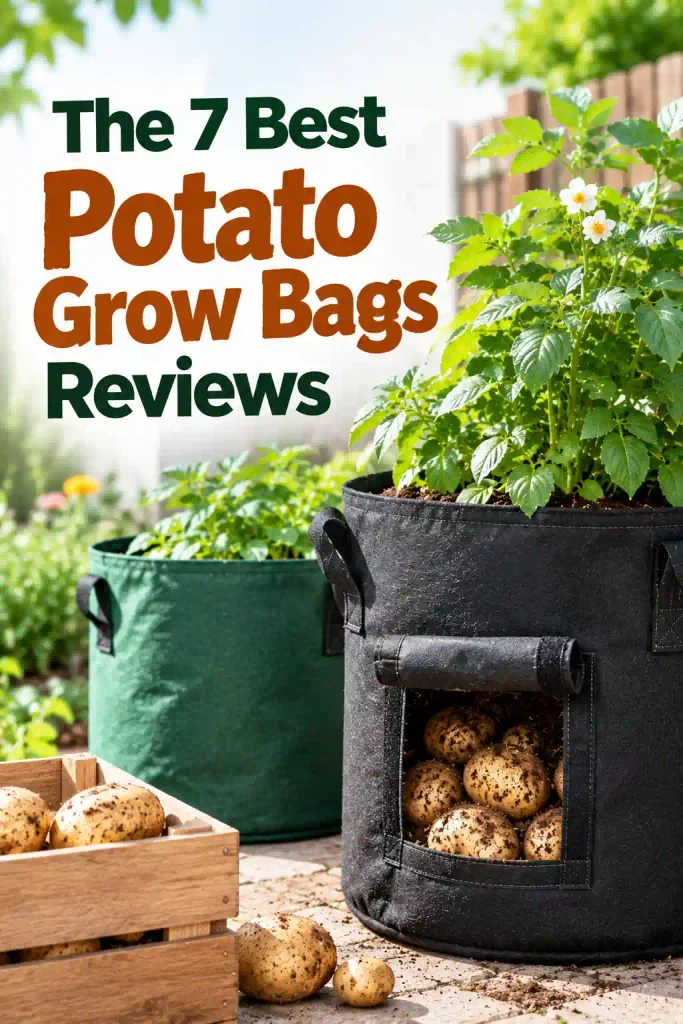
Whether you’re planting potatoes for the first time or expanding your container garden, choosing the right bag can make watering, maintenance, and harvesting more manageable. In this guide, we review seven potato grow bag options and explain what to look for in capacity, fabric quality, handles, and harvest-window design.
Our Top Picks
- Best Overall: Gardzen 10-Gallon Potato Grow Bags — Check on Amazon
- Best Budget Option: VIVOSUN Fabric Grow Bags — Check on Amazon
- Best for Easy Harvesting: Potato Grow Bags with Harvest Windows — Check on Amazon
- Best for Multiple Plants: 15-Gallon Potato Grow Bags — Check on Amazon
- Best for Compact Spaces: 5-Gallon Fabric Grow Bags — Check on Amazon
These recommendations cover different sizes and designs rather than seven identical products. Before ordering, confirm the exact capacity, package quantity, harvest-window design, and fabric specifications on the current listing.
Comparison Table: 7 Best Potato Grow Bags
| Product Name | Best For | Check Price |
|---|---|---|
| Gardzen 10-Gallon Potato Grow Bags | Home potato growing and convenient harvesting | Check on Amazon |
| VIVOSUN 10-Gallon Fabric Grow Bags | General container gardening and potatoes | Check on Amazon |
| Potato Grow Bags with Harvest Windows | Checking and harvesting tubers through a side opening | Check on Amazon |
| 15-Gallon Potato Grow Bags | Gardeners who want more soil volume | Check on Amazon |
| 5-Gallon Fabric Grow Bags | Small spaces and compact planting setups | Check on Amazon |
| Heavy-Duty Fabric Potato Planters | Repeated seasonal use and sturdy construction | Check on Amazon |
| Multi-Pack Potato Grow Bags with Handles | Growing several containers at once | Check on Amazon |
Affiliate disclosure: As an Amazon Associate I earn from qualifying purchases.
1. Gardzen 10-Gallon Potato Grow Bags — Best Overall
Gardzen’s 10-gallon potato grow bags are a strong starting point for home gardeners who want purpose-designed containers for growing potatoes. The brand offers a potato-bag option with breathable fabric, carry handles, and a hook-and-loop harvest window. The listed design is intended to let growers access some tubers through the side without tipping out the entire bag. Check the current product details to confirm the exact package and features before ordering.
A 10-gallon container offers a useful balance between planting capacity and space requirements for many home growers. It can hold enough growing medium for a small potato planting while remaining more manageable than an extra-large planter. Actual yield depends on potato variety, seed quality, sunlight, watering, soil conditions, and growing-season length.
Key Benefits
- A potato-focused design rather than a generic decorative planter.
- A side harvest window on the relevant model.
- Breathable fabric to help excess water drain.
- Handles that can make emptying and repositioning easier.
- A capacity suitable for many small container-gardening projects.
Potential Drawbacks
A full 10-gallon bag can become heavy, especially after watering. Handles are useful, but they should not be assumed to make a heavily loaded bag safe to carry. Choose the growing location before filling it, and check the listing for the exact dimensions and package quantity.
Best for: Home gardeners who want a purpose-designed potato bag with a harvest window.
Check Gardzen 10-Gallon Potato Grow Bags on Amazon
2. VIVOSUN 10-Gallon Fabric Grow Bags — Best for General-Purpose Use
VIVOSUN fabric grow bags are worth considering if you want containers that can be used for potatoes as well as other vegetables and garden plants. The brand offers nonwoven fabric grow bags in multiple capacities, including 10-gallon options. Depending on the model, features can include reinforced handles and breathable fabric designed to allow drainage.
Unlike a potato bag with a dedicated access flap, a standard fabric grow bag generally requires you to harvest by carefully emptying or opening up the growing medium. That simpler design may appeal to gardeners who value a versatile container and do not need a side window.
Key Benefits
- A general-purpose container for several types of plants.
- Multiple capacities to compare for different growing needs.
- Fabric sides that allow water to escape.
- Handles on relevant models for easier handling when empty or lightly loaded.
- Useful for gardeners who want to reuse containers across seasons.
Potential Drawbacks
Not every VIVOSUN grow bag is a potato-specific design, and standard models may not include a harvest window. Make sure you select the correct capacity and check the product photos and specifications. Fabric containers can also dry out faster than many plastic pots, so monitor soil moisture during warm or windy weather.
Best for: Gardeners who want versatile fabric grow bags for potatoes and other container crops.
Check VIVOSUN 10-Gallon Fabric Grow Bags on Amazon
3. Potato Grow Bags with Harvest Windows — Best for Easy Harvesting
Potato grow bags with harvest windows have a flap near the lower side of the container. The opening is intended to let you inspect or collect some tubers while leaving the remaining plant and growing medium in place.
This feature can be useful when you want to check whether potatoes are ready without immediately emptying the whole bag. However, opening the window does not guarantee that every potato will be accessible, and reaching inside can disturb roots or tubers. The flap should be closed securely after inspection to help keep the growing medium contained.
Key Benefits
- Side access can make spot-checking tubers easier.
- May reduce the need to empty the whole bag for a small harvest.
- Often designed specifically with potato growing in mind.
- Available in different capacities and package sizes.
Potential Drawbacks
Harvest windows vary in size, fastening method, and placement. A poorly positioned or loose flap may allow soil to spill out. Read the listing carefully and look for clear photographs showing the opening and how it closes.
Best for: Gardeners who want to inspect or harvest some potatoes through a side opening.
Check Potato Grow Bags with Harvest Windows on Amazon
4. 15-Gallon Potato Grow Bags — Best for More Growing Space
A 15-gallon potato grow bag is worth considering if you want more room for growing medium than a compact container provides. Additional soil volume can help accommodate a larger root zone and provide more space for the plant as it develops. It does not automatically guarantee a bigger harvest, because light, nutrition, water, and the potato variety remain important.
Larger bags may also be useful if you want to grow several seed pieces in one container, provided you leave enough room for the plants and follow appropriate spacing guidance. Avoid crowding too many plants into a single bag simply because it has a large advertised capacity.
Key Benefits
- More growing-medium capacity than many smaller bags.
- Useful for gardeners with sufficient patio or garden space.
- Can accommodate a planned planting of several seed pieces, depending on dimensions.
- Fabric construction may provide good drainage and airflow.
Potential Drawbacks
A larger bag needs more potting mix and takes up more floor space. Once filled and watered, it can be difficult to move. Check the bag’s actual diameter and height as well as its gallon rating, since two bags with the same stated capacity can have different shapes.
Best for: Gardeners who have space for a larger container and want additional soil volume.
Check 15-Gallon Potato Grow Bags on Amazon
5. 5-Gallon Fabric Grow Bags — Best for Compact Spaces
A 5-gallon fabric grow bag can be useful when space is limited or when you want to try growing potatoes in a small container before investing in larger bags. Its compact size can be easier to place on a patio or in a small garden, provided the surface is suitable and excess water can drain safely.
The trade-off is capacity. A smaller bag holds less growing medium and may limit the number of seed pieces you can plant. Choose a suitable potato variety and avoid overcrowding the container. If you want to maximize the chance of a useful harvest, compare the plant’s recommended growing requirements with the bag’s actual dimensions.
Key Benefits
- Requires less space than larger grow bags.
- Needs less growing medium to fill.
- Useful for small patios and beginner experiments.
- Can be easier to store when empty.
Potential Drawbacks
A 5-gallon bag may be restrictive for some potato varieties or planting plans. Smaller containers can also need more frequent watering because they hold less moisture overall. Do not assume a compact bag will provide the same yield as a larger one.
Best for: Beginners and gardeners with limited space who want to try a small potato planting.
Check 5-Gallon Fabric Grow Bags on Amazon
6. Heavy-Duty Fabric Potato Planters — Best for Repeated Seasonal Use
Heavy-duty fabric potato planters are worth comparing if you intend to grow potatoes every season and want a container made for repeated handling. Look for sturdy stitching, reinforced seams, suitable fabric weight, and handles that are securely attached. The label “heavy duty” alone is not a guarantee of durability, so check the actual construction details.
A well-chosen fabric planter can be emptied, cleaned according to the manufacturer’s instructions, dried, and stored between growing seasons. Its lifespan will depend on material quality, sun exposure, how it is handled, and whether it is stored completely dry.
Key Benefits
- Worth considering for gardeners who plan to reuse containers.
- Reinforced construction may help with repeated seasonal use.
- Breathable walls allow water to drain through the fabric.
- Flexible containers can be folded when empty.
Potential Drawbacks
Fabric exposed to sun, wet soil, and repeated movement can eventually weaken. Heavy-duty models may cost more upfront, and a thicker material does not necessarily mean the pot is better suited to every climate or planting style.
Best for: Gardeners who want to compare sturdier fabric containers for recurring potato crops.
Check Heavy-Duty Fabric Potato Planters on Amazon
7. Multi-Pack Potato Grow Bags with Handles — Best for Growing Several Containers
A multi-pack of potato grow bags is worth considering if you want to grow several plants or experiment with different varieties. Using multiple containers can help you separate varieties, stagger planting dates, or compare how plants perform in different locations.
Before choosing a pack, check the number of bags included and the capacity of each one. A listing may offer several sizes or bundle configurations, and the package shown in a photograph may not match the selected variation. Also check the handle construction and whether a harvest window is included.
Key Benefits
- Convenient for starting several container plantings.
- Lets you separate varieties or planting dates.
- Can offer better value than buying individual bags.
- Empty bags are generally easier to store than rigid planters.
Potential Drawbacks
A large pack can be poor value if you do not have enough space, soil, or time to maintain every container. More bags also mean more watering and monitoring. Estimate the number of plants you can realistically care for before buying a bulk set.
Best for: Gardeners planning multiple potato containers or staggered plantings.
Check Multi-Pack Potato Grow Bags on Amazon
How to Choose the Best Potato Grow Bags
The best potato grow bag depends on how much space you have, the potato variety you plan to grow, and how you prefer to harvest. Consider these factors before purchasing.
1. Choose a Suitable Capacity
For many home gardeners, bags in the 10- to 15-gallon range are a practical starting point, although the ideal size depends on the bag’s shape, the number of seed pieces, and the variety. Smaller bags can work for compact planting experiments, while larger containers require more space and growing medium.
Check the container’s dimensions rather than relying only on its gallon rating. Height and width both influence how much soil the bag can hold and how easily you can add growing medium around developing plants.
2. Decide Whether You Need a Harvest Window
A harvest window can let you inspect or collect some potatoes from the side. This may be convenient if you want to check maturity without emptying the entire bag.
A standard fabric grow bag can still grow potatoes successfully, but harvesting may involve tipping out the contents. If you choose a windowed design, check that the flap opens easily and closes securely.
3. Check Fabric Quality and Drainage
The fabric should be suitable for outdoor growing and allow excess water to escape. Check the manufacturer’s description for material, thickness, stitching, and care instructions.
Good drainage is important, but it also means fabric bags can dry faster than plastic containers. Place the bag where runoff is acceptable and monitor moisture more often in hot or windy conditions.
4. Look for Reliable Handles
Handles can help with positioning an empty bag or lifting it when it contains only a small amount of soil. A full bag of damp growing medium can be surprisingly heavy, so do not rely on the handles to move it after planting.
Choose the final location before filling the bag. This is especially important for balconies, decks, and other elevated surfaces where combined weight may matter.
5. Consider How Many Bags You Need
A single bag is a sensible way to test a variety and learn the watering routine. Several bags may be more useful if you want a larger harvest or plan to grow different varieties.
Remember that every container requires soil, water, sunlight, and ongoing attention. Buy a quantity you can manage rather than choosing a large pack solely because the price per bag looks lower.
6. Think About Your Growing Location
Potatoes generally need a sunny location and a growing medium that drains well. A patio or balcony can work if it receives adequate light and has a suitable surface for drainage.
Avoid placing a bag where runoff can damage flooring or where the container will remain waterlogged. If you are growing on an elevated deck or balcony, consider the weight of the bag, wet soil, and water, and follow any applicable load restrictions.
7. Match the Bag to the Potato Variety
Potato varieties differ in growth habit, maturity time, and expected size. Check the seed supplier’s recommendations for container growing and spacing before choosing your bag.
Do not assume that a bigger bag alone will guarantee more potatoes. Healthy seed potatoes, suitable light, consistent moisture, and appropriate nutrition all contribute to the outcome.
Fabric Potato Grow Bags vs. Plastic Pots
Both fabric bags and plastic pots can be used for container-grown potatoes. The differences mainly involve drainage, moisture retention, handling, and storage.
| Feature | Fabric Potato Grow Bags | Plastic Pots |
|---|---|---|
| Drainage | Water can escape through the fabric and base | Depends on the drainage holes |
| Airflow | Air can pass through the fabric | Limited through the walls |
| Moisture retention | Often dries more quickly | Often retains moisture longer |
| Storage | Many bags fold when empty | Rigid pots take up more room |
| Harvesting | Windowed bags may offer side access | Usually requires removing soil from the top |
| Durability | Depends on fabric and stitching | Depends on plastic quality and sun exposure |
| Handling | Flexible but can be awkward when full | Rigid shape may be easier to grip |
| Best use | Gardeners who value breathable, flexible containers | Gardeners who prefer rigid containers and slower drying |
Neither option is universally better. Fabric bags can be convenient when drainage and storage matter, while plastic pots may be useful where retaining moisture is a priority. In either case, the container must have adequate drainage and enough room for the crop.
Tips for Growing Potatoes in Grow Bags
Start with Healthy Seed Potatoes
Use certified seed potatoes or another reputable planting source suitable for your region. Potatoes bought for eating may be treated to inhibit sprouting, and their disease status may be uncertain.
Follow the supplier’s guidance on preparing and spacing seed pieces. Avoid planting diseased or badly damaged potatoes.
Use a Suitable Container-Growing Mix
Choose a loose, well-draining growing medium suitable for vegetables in containers. Dense garden soil may compact inside a bag and make drainage and root development more difficult.
Fill the bag only as needed at planting, leaving room to add more growing medium as the shoots grow. Follow the recommended planting method for your potato variety.
Add Growing Medium as the Plant Grows
Potato growers commonly add more growing medium around developing shoots as the plants grow, leaving the upper foliage exposed. This process is often called hilling. It helps cover developing tubers and reduces the chance that potatoes become exposed to light.
Avoid burying all the leaves at once. Follow reliable growing guidance for the variety and growing conditions you have.
Water Consistently
Potatoes need regular moisture, especially as plants grow and tubers develop. Fabric bags can lose water through their sides, so check the growing medium frequently.
Water thoroughly enough to moisten the root zone, while allowing excess water to drain. Do not let the bag stand in a pool of runoff, and avoid letting the growing medium swing repeatedly between very dry and waterlogged.
Provide Adequate Sunlight
Choose a location with enough sunlight for the variety and local climate. In very hot conditions, a container may heat and dry more quickly than an in-ground planting, so monitor plant stress and soil moisture.
If the bag is on a patio, allow enough space for foliage and airflow around neighboring containers.
Feed According to the Crop’s Needs
Container plants may need nutrients replenished during the growing season. Use a fertilizer suitable for potatoes and follow its label instructions. Excess fertilizer can harm plants and contribute to nutrient runoff.
Avoid assuming that more fertilizer will produce a larger harvest. Consistent care and suitable growing conditions matter as well.
Harvest at the Right Time
Potatoes grown for early use may be harvested before the foliage fully dies back, while potatoes intended for storage are generally allowed to mature until the foliage has died down. Timing depends on the variety and the intended use.
If your bag has a harvest window, use it carefully and close it again after checking. For a full harvest, empty the bag gently to avoid damaging the tubers.
Common Mistakes to Avoid
- Choosing a bag that’s too small: Check the variety’s container and spacing recommendations.
- Planting too many seed pieces: Overcrowding can limit the space and resources available to each plant.
- Letting the growing medium dry out: Fabric bags can lose moisture faster than plastic pots.
- Keeping the bag waterlogged: Good drainage is essential for healthy roots and tubers.
- Moving a filled bag unnecessarily: Wet soil can make containers very heavy and strain their handles.
- Expecting a harvest window to reveal every potato: Some tubers may remain deeper in the bag.
- Using unsuitable soil: Dense or poorly draining material can compact in a container.
- Assuming a larger bag guarantees a bigger crop: Variety, light, watering, nutrients, and growing conditions all matter.
- Ignoring the final location: Plan for sunlight, drainage, and the weight of the filled container before planting.
Frequently Asked Questions
What size grow bag is best for potatoes?
A 10- to 15-gallon bag is a useful starting point for many home container gardeners. The right capacity depends on the bag’s dimensions, potato variety, and number of seed pieces. Always check growing guidance for your specific variety.
Are potato grow bags with harvest windows worth it?
They can be useful if you want to inspect or collect some tubers without emptying the whole container. They are not essential, though; potatoes can also be grown in standard fabric bags and harvested by emptying the contents.
Can I grow potatoes in a regular fabric grow bag?
Yes, provided the bag is large enough for your planting plan, drains well, and is used with a suitable growing medium. A standard grow bag may not have a side harvest window, so the final harvest may require emptying it.
How many potato plants can go in one grow bag?
That depends on the bag’s capacity and dimensions, as well as the variety and planting recommendations. Avoid crowding seed pieces together. Follow the supplier’s guidance and leave enough room for healthy growth.
Do potato grow bags need drainage holes?
Purpose-made fabric grow bags normally drain through the material and base. Additional holes are generally unnecessary unless the manufacturer says otherwise. Place the bag where excess water can drain safely.
How often should I water potatoes in grow bags?
There is no fixed schedule for every garden. Check the growing medium regularly, especially during warm weather, and water when needed to keep it consistently moist without leaving it waterlogged. Wind, sun, bag size, and plant maturity all affect moisture loss.
Can potato grow bags be reused?
Many fabric bags can be reused if they remain in good condition and are cleaned, dried, and stored according to the manufacturer’s instructions. Inspect seams, handles, and fabric for damage before the next planting.
Can I use potato grow bags on a balcony?
Yes, if the balcony receives suitable sunlight and has a safe way to manage drainage. Remember that a bag filled with wet soil can be heavy. Consider the total load and follow any building or balcony weight restrictions.
Are fabric bags better than plastic pots for potatoes?
Fabric bags can offer breathable sides and flexible storage, but they may dry out faster. Plastic pots can retain moisture longer and have rigid walls. Both can work when the size, drainage, growing medium, and care routine are appropriate.
How do I know when potatoes are ready to harvest?
Read the growing instructions for your variety. For many main-crop potatoes, the foliage dies back as the crop matures; early potatoes may be harvested sooner. Use a harvest window for careful spot-checking if available, but avoid damaging developing tubers.
Helpful Sources
- University of Minnesota Extension: Growing Potatoes in Home Gardens — Educational guidance on potato varieties, planting, watering, and harvest timing.
- VIVOSUN Official Grow Bags — Review current fabric grow bag sizes, materials, and product options.
- Gardzen Potato Grow Bags — Check the manufacturer’s listed capacity, handles, fabric, and harvest-window design.
Product listings and garden conditions can change, so verify the current specifications before purchasing and use growing guidance appropriate to your region.
Final Words
The best potato grow bags offer enough room for healthy growth, reliable drainage, and a design that fits your harvesting preferences. Gardzen’s potato-focused bags are worth comparing if you want a harvest window, while VIVOSUN and other general-purpose fabric bags may suit gardeners who prefer flexible containers for multiple crops.
Before buying, compare the bag’s capacity, dimensions, construction, and package quantity. Choose a suitable growing location, monitor moisture carefully, and follow the planting guidance for your potato variety. With the right container and consistent care, grow bags can make potato gardening accessible even when you don’t have a traditional garden bed.