
Fabric pots are a practical alternative to traditional plastic planters for gardeners who want good drainage, better airflow around plant roots, and flexible containers that are easier to store between growing seasons. Geo fabric pots are particularly worth exploring if you need breathable grow containers in a range of sizes, from small herb planters to large containers for tomatoes, potatoes, shrubs, and other plants.
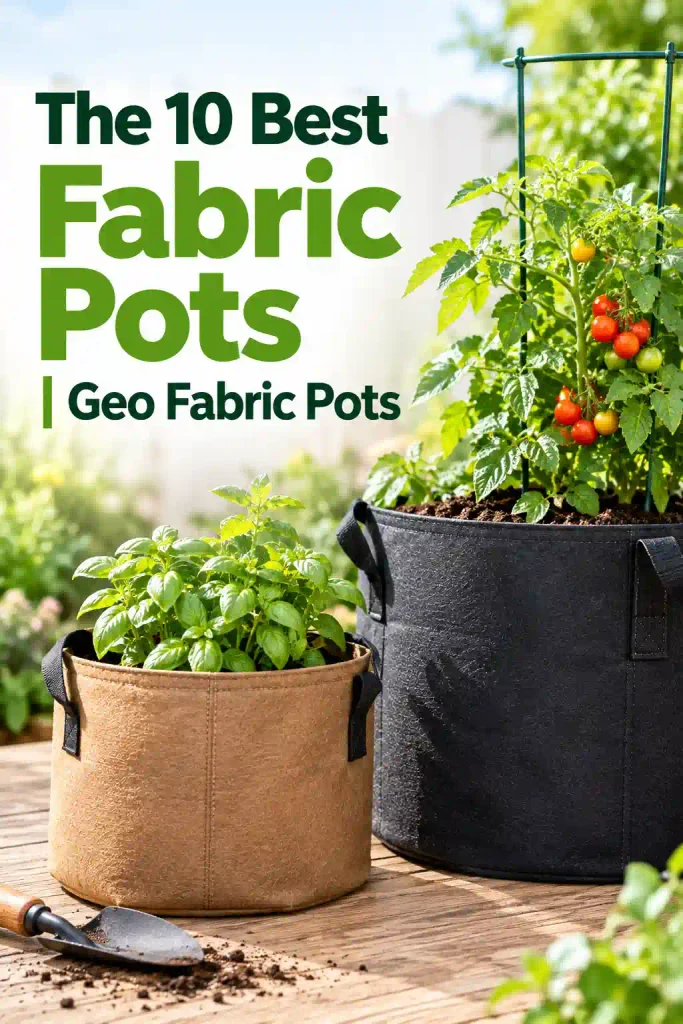
The best fabric pot depends on what you plan to grow, how much soil the plant needs, and whether you need sturdy handles or a container that can withstand repeated outdoor use. This guide compares 10 fabric-pot options and styles, explains their advantages and limitations, and helps you choose the right size for your garden.
Our Top Picks
- Best Overall Geo Fabric Pot: GeoPot Fabric Grow Bags — Check on Amazon
- Best Budget Option: VIVOSUN Fabric Grow Bags — Check on Amazon
- Best for Everyday Vegetable Gardening: Gardzen Fabric Grow Bags — Check on Amazon
- Best for Indoor Growing Setups: AC Infinity Fabric Pots — Check on Amazon
- Best for Repeated Seasonal Use: Smart Pot Fabric Containers — Check on Amazon
These options represent different fabric-pot brands and growing needs. Product specifications, package quantities, and availability can vary by listing, so verify the exact model before purchasing.
Comparison Table: 10 Best Fabric Pots
| Product Name | Best For | Check Price |
|---|---|---|
| GeoPot Fabric Grow Bags | Gardeners seeking Geo-style fabric containers in multiple sizes | Check on Amazon |
| VIVOSUN Fabric Grow Bags | Budget-friendly vegetable gardening | Check on Amazon |
| Gardzen Fabric Grow Bags | Tomatoes, peppers, herbs, and flowers | Check on Amazon |
| AC Infinity Fabric Pots | Indoor growing and container gardening | Check on Amazon |
| Smart Pot Fabric Containers | Established fabric-pot growing systems | Check on Amazon |
| Bootstrap Farmer Fabric Grow Bags | Gardeners seeking reusable growing containers | Check on Amazon |
| iPower Fabric Grow Bags | Affordable multipacks and common pot sizes | Check on Amazon |
| Hydro Crunch Fabric Pots | Indoor and outdoor container growing | Check on Amazon |
| Garden4Ever Fabric Grow Bags | Home vegetable and herb gardens | Check on Amazon |
| Heavy-Duty Geotextile Fabric Pots | Larger plants and substantial soil volumes | Check on Amazon |
Affiliate disclosure: As an Amazon Associate I earn from qualifying purchases.
1. GeoPot Fabric Grow Bags — Best Overall Geo Fabric Pot
GeoPot is a brand to consider if you specifically want fabric pots designed for repeated gardening use. Its fabric containers are available in different formats and sizes, making them worth comparing for home gardens, larger plants, and more substantial growing setups.
Fabric pots work differently from rigid plastic planters. Their porous sides allow air to reach the growing medium and permit excess moisture to escape through the fabric. When roots reach the air-exposed sides, some root tips may stop extending, encouraging branching rather than continued circling along the container wall. The result depends on the plant, growing medium, watering, and overall conditions.
Why Consider GeoPot?
- A branded option for fabric-based growing containers.
- Multiple sizes and styles may be available for different planting needs.
- Useful for gardeners who prefer flexible containers to rigid plastic pots.
- Worth comparing for both small planting projects and larger growing setups.
Potential Drawbacks
Not every GeoPot model has the same shape, material thickness, handles, or capacity. Some versions may be more suitable for permanent placement, while others are easier to move. A fabric container can also dry faster than a nonporous pot, especially in hot, windy, or sunny locations.
Before buying, check the exact product dimensions, fabric specifications, and manufacturer care instructions.
Best for: Gardeners looking specifically for GeoPot-branded fabric containers.
Check GeoPot Fabric Grow Bags on Amazon
2. VIVOSUN Fabric Grow Bags — Best Budget Option
VIVOSUN fabric grow bags are worth comparing if you want several containers for a vegetable garden without investing in expensive rigid planters. They are commonly searched for in multipacks and several capacity options, which can be convenient when growing multiple plants at once.
These bags can be suitable for tomatoes, peppers, herbs, and other plants that grow well in containers. Choosing the correct size is essential: a small bag may work for an herb, while a larger fruiting plant often needs considerably more growing medium and room for its roots.
Key Advantages
- Often available in multipacks for multiple planting locations.
- Flexible design that is easier to store than rigid containers.
- Suitable for many common container-gardening projects.
- A practical option for gardeners who want to compare different capacities.
What to Consider
Check the fabric weight, handle construction, and exact capacity of the selected model. A bag’s advertised gallon capacity does not guarantee that it will retain a particular shape when filled.
Also consider where you will place it. Water can drain through the bottom and sides, so protect wooden decks and indoor flooring with an appropriate waterproof tray while ensuring that excess water does not accumulate around the roots.
Best for: Budget-conscious gardeners setting up a vegetable garden with several fabric containers.
Check VIVOSUN Fabric Grow Bags on Amazon
3. Gardzen Fabric Grow Bags — Best for Everyday Vegetable Gardening
Gardzen fabric grow bags are another option to compare for everyday home gardening. They are worth considering if you want containers for vegetables, herbs, flowers, or seasonal planting projects.
One advantage of fabric bags is their flexibility. When empty, they can generally be folded or stacked for storage. When filled, they provide a planting space without the weight and bulk of a large rigid planter, although the weight of wet soil can still make a filled bag difficult to move.
Main Benefits
- Useful for common vegetable and flower containers.
- Flexible construction for convenient off-season storage.
- Different sizes may accommodate different types of plants.
- A practical alternative to rigid plastic pots for outdoor gardens.
Potential Drawbacks
The fabric’s thickness and the strength of the seams can differ between models. If you intend to move a bag frequently, check the handle design and the manufacturer’s guidance on moving it when full.
Fabric bags also need regular watering checks. Their breathable sides can lose moisture more quickly than the walls of plastic containers, particularly during warm weather.
Best for: Home gardeners who want versatile fabric containers for vegetables and flowers.
Check Gardzen Fabric Grow Bags on Amazon
4. AC Infinity Fabric Pots — Best for Indoor Growing Setups
AC Infinity fabric pots are worth exploring if you are organizing an indoor growing area or want containers that work with a more controlled growing setup. Fabric pots can be used indoors or outdoors, provided the chosen model suits the plant and growing environment.
Indoor growing requires particular attention to drainage. Water that escapes from the pot must be collected or directed safely so it does not damage floors, furniture, or electrical equipment. A saucer or drainage tray can help, but it should not leave the plant standing in stagnant water.
Why Consider These Fabric Pots?
- Worth comparing for indoor container-growing arrangements.
- Fabric construction allows air and water to pass through the pot walls.
- Different sizes may be available for different planting needs.
- Flexible containers can be easier to store when not in use.
Potential Drawbacks
A fabric pot does not manage watering automatically. Plants may dry out quickly in warm rooms or under grow lights, while poor drainage management can create indoor messes. Check the exact dimensions and whether the selected product includes a tray or other accessories.
If the pot will be placed inside a grow tent, measure the available floor space and allow enough room to access the plant for watering and maintenance.
Best for: Gardeners setting up indoor container-growing areas.
Check AC Infinity Fabric Pots on Amazon
5. Smart Pot Fabric Containers — Best for Established Fabric-Pot Gardening
Smart Pot is another brand worth comparing when shopping for fabric growing containers. It is especially relevant if you want to explore established fabric-pot designs rather than choosing solely by the lowest price.
The most useful features to evaluate are fabric durability, pot capacity, seam construction, and whether the container holds its intended shape once filled. These details become more important when growing larger plants or using the same container over multiple seasons.
Key Benefits
- A branded fabric-container option for home and other growing setups.
- Suitable for comparing different pot sizes and growing requirements.
- Flexible walls that allow air and moisture to pass through.
- Worth considering if you want an alternative to conventional plastic pots.
Potential Drawbacks
A fabric pot’s suitability for long-term use depends on its construction and how it is cared for. Fabric exposed to sunlight, soil, moisture, and repeated handling can eventually wear out.
Check the exact model rather than assuming every product in a brand’s range has identical material weight or features.
Best for: Gardeners who want to compare established fabric-pot brands and container sizes.
Check Smart Pot Fabric Containers on Amazon
6. Bootstrap Farmer Fabric Grow Bags — Best for Reusable Garden Containers
Bootstrap Farmer is worth considering if you are building a more organized garden setup and want to compare reusable growing containers. Before choosing a product, check its current catalog and the exact style available, since product lines and specifications may change.
For repeated seasonal use, the quality of the seams and the fabric itself matters. A well-maintained pot can be emptied, cleaned according to its care instructions, and stored when not in use. However, no fabric container should be assumed to last a particular number of seasons without checking the manufacturer’s claims and considering your growing conditions.
What Makes This Option Worth Comparing?
- A brand to investigate for garden-growing supplies.
- Useful for comparing container formats and planting needs.
- Flexible fabric construction can simplify empty-pot storage.
- May suit gardeners planning several growing containers.
Potential Drawbacks
Confirm the exact fabric-pot product is currently available before making a decision. Check its capacity, dimensions, handles, and cleaning guidance rather than assuming the specifications of another product from the same brand apply.
Best for: Gardeners who want to compare reusable containers as part of a planned growing setup.
Check Bootstrap Farmer Fabric Grow Bags on Amazon
7. iPower Fabric Grow Bags — Best for Affordable Multipacks
iPower fabric grow bags are worth comparing if your priority is purchasing several containers in common sizes. Multipacks can be useful for planting several vegetables at once, experimenting with different varieties, or organizing a small container garden.
When comparing bags, pay attention to more than the number of pots in the package. Fabric weight, seam quality, handles, and dimensions influence how useful a bag will be for your intended plants.
Key Advantages
- A convenient category to explore for multipack options.
- Useful for growing several container plants.
- Flexible containers can be stored when empty.
- Different capacities may suit different planting projects.
Potential Drawbacks
A lower price per pot does not always mean better value. Very lightweight bags may be less suitable for frequent movement or heavy, mature plants. Verify the material and construction before choosing a large pack.
If you are a beginner, consider buying a few different sizes first. This lets you learn how much soil each plant needs before committing to many identical containers.
Best for: Gardeners who want several fabric pots for a budget-conscious planting setup.
Check iPower Fabric Grow Bags on Amazon
8. Hydro Crunch Fabric Pots — Best for Indoor and Outdoor Containers
Hydro Crunch fabric pots are another option to compare for container gardening. Fabric pots can be useful in different growing environments, but the right model depends on the plant, available space, drainage requirements, and how frequently you can check soil moisture.
If you are growing plants indoors, plan for drainage and airflow around the container. For outdoor growing, consider exposure to direct sun, wind, and rain. Both environments affect how quickly the growing medium dries.
Potential Benefits
- Worth comparing for different container-growing arrangements.
- Flexible construction can make empty pots easier to store.
- Fabric walls allow air and moisture to pass through.
- Different capacities may suit a range of plant sizes.
Potential Drawbacks
Check the exact product description for material, capacity, and included accessories. Not every fabric pot is suitable for the same environment or growing method.
For indoor use, place the pot in a suitable catch tray and avoid allowing runoff to collect around the roots.
Best for: Gardeners comparing fabric containers for indoor or outdoor planting.
Check Hydro Crunch Fabric Pots on Amazon
9. Garden4Ever Fabric Grow Bags — Best for Home Vegetable Gardens
Garden4Ever fabric grow bags are worth comparing if you want flexible containers for a home vegetable or herb garden. As with other grow-bag brands, the best model is the one that offers enough root space and reliable construction for the plants you intend to grow.
For a compact patio, several smaller containers can be easier to arrange than a single oversized planter. In a larger garden, bigger bags can accommodate plants that need more soil volume. Choose based on mature plant size rather than the size of the seedling when you buy it.
Main Benefits
- A category to explore for home garden containers.
- Useful for vegetables, herbs, and seasonal flowers when sized appropriately.
- Flexible design for storage when empty.
- Can be arranged in different garden layouts.
What to Check
Confirm current product availability and review the dimensions of the exact listing. Look for clear information about the fabric, handle design, and package quantity.
For outdoor placement, consider the surface beneath the bag. Fabric pots drain through their walls and base, so position them where runoff will not cause damage or create a persistently wet area.
Best for: Home gardeners who want flexible containers for everyday vegetable and herb growing.
Check Garden4Ever Fabric Grow Bags on Amazon
10. Heavy-Duty Geotextile Fabric Pots — Best for Larger Plants
Heavy-duty geotextile fabric pots are worth considering when a small, lightweight grow bag is not suitable for your planting needs. Geotextile fabric is used in different products and applications, so verify that the specific item is designed and rated for growing plants rather than assuming every geotextile bag is a horticultural container.
Larger fabric pots can accommodate substantial volumes of growing medium. They may be useful for larger vegetable plants, shrubs, or grouped plantings when the selected size matches the plant’s needs. Some manufacturers also offer large fabric containers in custom sizes.
Key Benefits
- Larger capacities may be available for plants that need more root space.
- Flexible construction can be useful for substantial container gardens.
- Breathable materials can provide drainage and airflow.
- Worth comparing for large-scale home gardening.
Potential Drawbacks
A large fabric pot filled with wet soil can be extremely heavy. Choose its location before filling it, especially if it will sit on a deck, balcony, or other structure with load limits.
Also check the product’s intended use, material safety, fabric weight, seams, and drainage characteristics. A general-purpose geotextile bag is not automatically equivalent to a purpose-made plant pot.
Best for: Gardeners who need larger-capacity fabric containers and can verify that the product is designed for planting.
Check Heavy-Duty Geotextile Fabric Pots on Amazon
How to Choose the Best Fabric Pots
Choosing the right fabric pot starts with the plant you intend to grow. The best container for a small herb may be too small for a mature tomato plant, while a very large pot can use more soil and space than necessary for a small crop.
1. Choose the Correct Capacity
Fabric pots are commonly sold by gallon capacity. The following sizes are general starting points, not universal rules for every plant variety.
| Pot Capacity | Common Uses |
|---|---|
| 1–3 gallons | Many herbs, lettuce, and smaller plants |
| 5–7 gallons | Many tomatoes, peppers, and medium-sized vegetables |
| 10–20 gallons | Larger vegetable plants and some small shrubs |
| 25 gallons or more | Large plants or projects requiring substantial soil volume |
Check the growing requirements of the specific plant and cultivar. Root depth, mature size, climate, and the length of the growing season all affect the amount of soil needed.
2. Check Fabric Weight and Durability
Fabric thickness can influence how a pot feels, holds its shape, and stands up to repeated handling. Some products list fabric weight in grams per square meter (GSM), while others describe the material without giving a comparable figure.
A heavier fabric may be useful for certain demanding applications, but weight alone does not establish quality. Construction, seams, material type, and exposure to weather also matter.
3. Look for Strong Handles if You Need Them
Handles can make it easier to reposition an empty or lightly filled grow bag. However, a pot containing wet soil and a mature plant may weigh far more than expected.
Inspect the stitching and handle construction, and follow the manufacturer’s instructions for moving the pot. For large containers, it is usually better to select the final location before filling them.
4. Consider Drainage and Aeration
Fabric pots allow moisture and air to move through their walls. This can reduce the risk of water remaining trapped in the container compared with some poorly drained setups.
The same feature can cause the growing medium to dry more quickly. Your watering schedule may need to change according to temperature, wind, plant size, and the type of potting mix you use.
5. Decide Between Round and Square Shapes
Round fabric pots are common and can be convenient for individual plants. Square or rectangular fabric containers may make better use of limited space, depending on the layout.
Before buying, measure the area where the pots will sit. Remember to leave room for plant foliage, watering access, and airflow between containers.
6. Check Whether the Pot Is Reusable
Some fabric pots can be emptied, cleaned, dried, and reused. Their lifespan depends on the material, stitching, storage, weather exposure, and how they are handled.
Review the manufacturer’s care instructions. Clean containers between crops when appropriate, particularly if you have experienced plant disease or pest problems.
7. Think About Indoor and Outdoor Placement
Outdoor pots need to cope with weather and should be positioned where drainage will not damage nearby surfaces. Indoor pots usually require trays to collect runoff.
If you plan to grow plants on a balcony or elevated deck, consider the combined weight of the container, wet growing medium, water, and mature plant. Follow any applicable load restrictions.
Geo Fabric Pots vs. Traditional Plastic Pots
Fabric pots and plastic pots can both grow healthy plants when selected and managed appropriately. Their differences affect watering, storage, durability, and how roots interact with the sides of the container.
| Feature | Fabric Pots | Plastic Pots |
|---|---|---|
| Airflow | Air can pass through the fabric | Limited through the walls |
| Drainage | Water can escape through the fabric and base | Depends mainly on the drainage holes |
| Moisture retention | Often dries faster | Often retains moisture longer |
| Storage | Many empty bags can be folded | Rigid pots take up more space |
| Root behavior | Air exposure can encourage root branching | Roots may circle along the inside wall |
| Durability | Depends on fabric and stitching | Depends on plastic quality and sun exposure |
| Moving when filled | Flexible, but can be heavy and awkward | Rigid shape may be easier to handle |
| Best use | Gardeners who value breathability and flexible storage | Gardeners who prefer rigid containers and slower drying |
Neither type is automatically better for every garden. Fabric pots may be helpful when drainage and aeration are priorities, while plastic pots can be convenient when slower moisture loss is desirable.
Tips for Using Fabric Pots Successfully
Use a Suitable Growing Medium
Choose a potting mix suitable for your plant and container size. Garden soil alone can become dense in a container and may drain poorly, depending on its composition.
A good container mix should provide a balance of water retention, drainage, and aeration for the plants you are growing.
Monitor Watering More Frequently
Fabric pots can lose moisture through their sides as well as through the surface of the soil. Check the growing medium regularly, particularly during hot weather or when plants are large and actively growing.
Water according to the plant’s needs rather than following a rigid schedule. Avoid letting the pot dry out completely unless the plant’s requirements call for a drying period.
Add Fertilizer According to Plant Needs
Nutrients can leach out with drainage water, so container-grown plants may need regular feeding. Use a fertilizer appropriate for the crop and follow the label directions.
Overfertilizing can damage roots and contribute to nutrient runoff. More fertilizer is not necessarily better.
Place Pots Where They Receive Suitable Light
Different plants need different amounts of sunlight. Tomatoes and many fruiting vegetables generally need substantial direct light, while some herbs and leafy crops tolerate partial shade.
Choose the location based on the plant, not just the container. Make sure nearby pots do not block the light or airflow that your crops need.
Clean and Store Pots Properly
At the end of a growing season, empty the pots and follow the manufacturer’s cleaning instructions. Let them dry completely before storing them in a clean location.
Inspect the fabric and seams before reusing them. Replace pots that are badly damaged or no longer hold their contents reliably.
Common Mistakes to Avoid When Buying Geo Fabric Pots
- Choosing a pot that is too small: Check the mature plant’s root and soil-volume requirements.
- Assuming all geotextile bags are plant pots: Verify that the product is intended for growing plants.
- Ignoring fabric specifications: Material and stitching can affect durability.
- Forgetting about watering: Breathable fabric can dry out faster than plastic.
- Moving a large pot after filling it: Wet soil can make even a flexible container very heavy.
- Using fabric pots indoors without a drainage plan: Protect flooring and nearby surfaces from runoff.
- Assuming a pot will last indefinitely: Weather, handling, and repeated use can wear down fabric.
- Buying a large multipack before testing a size: Start with the capacities your plants actually need.
Frequently Asked Questions
What are Geo fabric pots?
Geo fabric pots generally refer to breathable fabric grow containers, including geotextile-based pots used for growing plants. The term can also be used to describe branded products such as GeoPot. Always check the specific brand, intended use, and fabric specifications.
Are GeoPot and geotextile fabric pots the same thing?
Not necessarily. GeoPot is a brand name, while geotextile describes a category of textile materials used in various applications. Some fabric grow pots are made from geotextile materials, but not every geotextile bag is designed for gardening.
What size fabric pot is best for tomatoes?
Many tomato plants can be grown in containers around 5–10 gallons, but requirements vary by cultivar, growing conditions, and the amount of support provided. Larger or vigorous indeterminate varieties may benefit from more soil volume. Check the seed supplier’s or plant breeder’s recommendations.
Are fabric pots better than plastic pots?
Fabric pots provide airflow through their sides and can offer good drainage, but they may dry faster. Plastic pots retain moisture longer and have rigid walls. The better choice depends on your plant, climate, watering habits, and garden setup.
Do fabric pots help prevent roots from circling?
Air exposure at the fabric’s surface can stop some root tips from continuing to grow and encourage branching. This process is commonly called air pruning. Its effects depend on plant species, container design, and growing conditions.
Can fabric pots be reused?
Many fabric pots can be reused when cleaned, dried, and stored according to the manufacturer’s instructions. Their lifespan varies with material quality, sunlight exposure, handling, and growing conditions.
Do fabric pots need drainage holes?
Purpose-made fabric pots generally allow water to drain through the material and base. Additional holes are usually unnecessary unless the product instructions specify otherwise. Make sure the pot is placed where excess water can escape safely.
Can I use fabric pots indoors?
Yes, provided the container suits the plant and you have a way to collect drainage water. Use a suitable tray, keep the pot from standing in stagnant water, and protect flooring and electrical equipment from runoff.
How often should I water fabric pots?
There is no single schedule that works for every fabric pot. Check the growing medium regularly and water when appropriate for the plant and conditions. Heat, wind, pot size, plant maturity, and soil mix all influence how quickly moisture is lost.
Are larger fabric pots always better?
No. Larger pots provide more growing medium but also take up more space, cost more to fill, and become heavier when wet. Choose a capacity appropriate for the plant’s mature size and growing requirements.
Helpful Sources
- GeoPot Official Website — Review the manufacturer’s fabric-pot product information, available sizes, and care details.
- B. J. Geotextile: Fabric Pot and Grow Bags — Learn about geotextile grow bags, available capacities, and their intended gardening uses.
- University of Minnesota Extension: Container Gardening — Consult educational guidance on growing plants in containers and managing their growing conditions.
Use manufacturer specifications and trusted gardening guidance to confirm that a particular pot suits your plants and environment.
Final Words
The best fabric pots offer the right combination of capacity, breathability, durability, and convenience for your garden. GeoPot is worth exploring if you specifically want a branded fabric-pot option, while VIVOSUN, Gardzen, Smart Pot, and other alternatives provide additional products to compare for different budgets and planting needs.
Before choosing, verify the exact product listing, fabric construction, pot dimensions, and available features. Select the size for your plant’s mature needs, plan for faster moisture loss than you might experience with plastic containers, and make sure excess water can drain safely. With the right pot and regular care, fabric containers can be a useful part of a home vegetable, herb, or flower garden.
Always wanted one of those so took advantage of the particular provide, planted just a few weeks ago and it’s looking nice a lot so I’ve made room for an additional on the other aspect of my garden and just ordered another. I once noticed one in a darkish dwelling room in Sussex that was so drawn out, it took me a while before I acknowledged what it was.
So take the time to search out which cooler you need so you might be as lazy as will be whereas it remains to heat outdoors. Palm tree seeds could also be discovered rarely in a chicken nest, which will be obtained randomly while Woodcutting or from Managing Miscellania. The plates are made from the Palm tree.
Cold hardy palm trees are an invaluable panorama tree in cold areas where a tropical look, round pools, and patios are useful. The fantastically textured fronds make the palm stand out from different plants in the panorama.
Good Morning! I was looking for grow pots for home gardening! And I found Your Website, It’s a helpful post for me, And Now I know which pot to buy, thank you for sharing this content with us
Hi Tom, I’m glad to hear that my little afford helps you!
Hi David, How are you? I am an indoor gardener, you are 100% right, fabric grow bag makes indoor gardening very easy! I am growing vegetables in fabric pots from 2010, thank you for your hard work! I hope lots of will be benefited from this best fabric plant pots post.
Hi there, I’m fine. thank you so much for your comment!